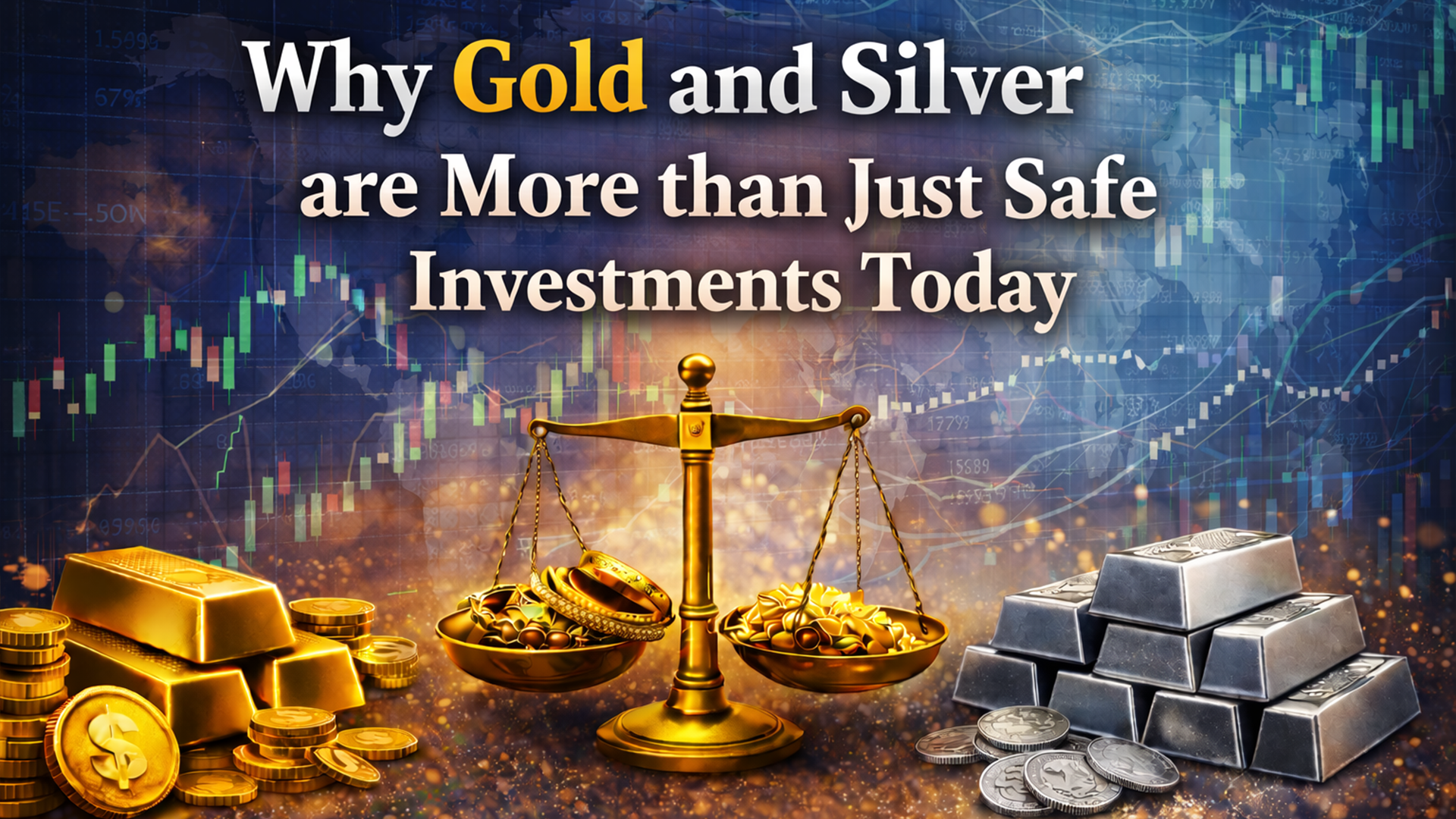
Gold and silver have long been regarded as secure investments. In times of economic crises, inflation, or global uncertainties, people typically turn to them. However, in the modern world, gold and silver are no longer merely “just in case” possessions. They are now strategic assets that are much more important in global markets, business decisions, and personal finance.
People can make more informed decisions about purchasing, holding, or selling precious metals if they are aware of this remarkable global shift.
From Safety to Strategy
Gold and silver were traditionally thought of as tools of financial security. People purchased gold and silver to safeguard their wealth when markets became volatile or currencies declined. Although they still play this role, their significance has expanded well beyond just safety.
Gold and silver are actively utilised in financial planning today. They are strategically used by governments, investors, companies, and even individuals to manage uncertainty, balance risk, and capitalise on shifting market conditions.
Growing Demand in a Changing World
Growing uncertainty around the world is one of the main reasons gold and silver have become strategic assets. The demand for real-value assets has increased due to economic shifts, worries about inflation and geopolitical unrest.
The use of silver in industry has increased concurrently. These days, electronics, renewable energy, medical devices and technology all make extensive use of silver. This indicates that silver is an important industrial material in addition to being a valuable investment.
However, gold is still necessary for wealth storage, jewellery markets and central banks. Both metals are more valuable and important than ever due to the combination of investment, industrial and cultural demand.
A Tool for Financial Flexibility
Liquidity is something that gold and silver provide that many other assets do not. Nearly anywhere in the world, they are easily convertible into cash. Because of this, they are effective tools in times of emergency or when quick access to money is required.
Holding gold or silver allows people and families to have an asset that can be sold when needed without complicated procedures or a lot of paperwork. Many people now see precious metals as part of their financial strategy rather than just for long-term storage because of this flexibility.
Why This Matters to Gold Owners
In the form of jewellery, coins, bars or inherited objects, many people possess gold or silver. These are frequently stored for years without being fully appreciated.
In the current market, market trends, currency fluctuations and global demand all affect the price of gold and silver. This implies that jewellery that is outdated or unused may now be worth significantly more than expected. Understanding gold and silver as strategic assets enables people to determine when it might be appropriate to sell, reinvest or use the money for necessities.
A Practical Asset for Everyday Life
Gold and silver are no longer reserved for wealthy people or investors. They are involved in financial decisions that are made on a daily basis, such as financing education, assisting businesses, paying for medical care or taking care of family obligations.
This change is crucial for businesses like Cash Gold. It illustrates how people now view gold and silver as active financial resources that can help achieve real-life objectives rather than merely as backup assets.
Conclusion
The traditional perception of gold and silver as safe havens has changed. They are strategic assets in the modern world, utilized for opportunity, stability and flexibility. These metals continue to be crucial to contemporary financial life, whether they are kept as investments, savings or jewellery.
People are better able to decide whether to hold, sell or turn gold and silver into new opportunities when they are aware of their true value.