
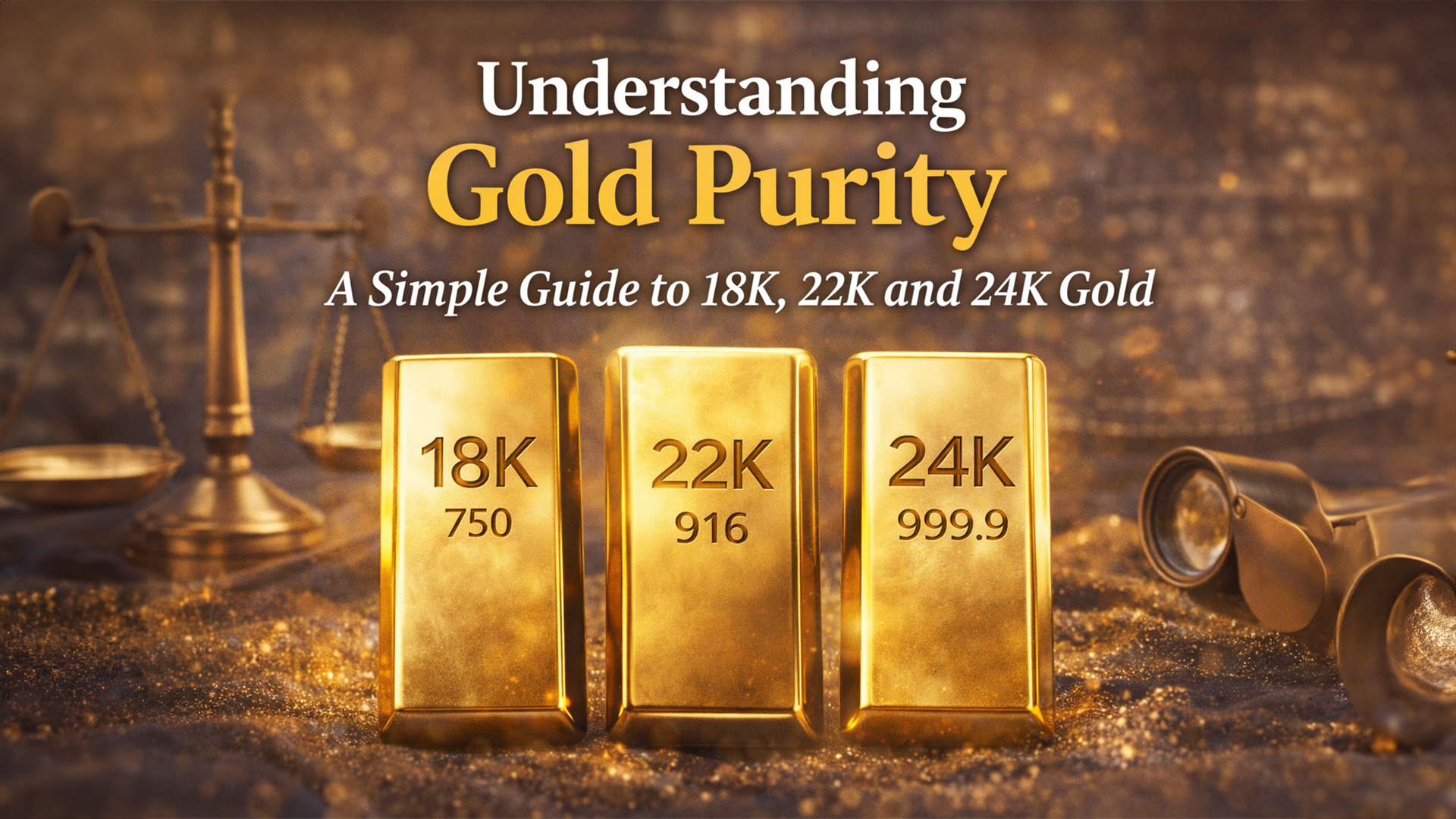
Because of its beauty, scarcity, and enduring value, gold has been prized for centuries. In Sri Lanka, wearing gold jewelry is considered a sign of financial security in addition to being fashionable. One of the most crucial concepts to comprehend when purchasing or selling gold is its purity. What do terms like 18Kt, 22Kt, and 24Kt gold actually mean? You may have heard them.
This guide helps you understand how gold purity impacts the value of your jewelry by providing a straightforward explanation.
What Does “Karat” Mean in Gold?
Karats (Kt) are used to measure the purity of gold. The definition of pure gold is 24 karats, which indicates that the metal is nearly entirely composed of gold and contains no other metals.
But pure gold is incredibly delicate. To make it stronger and better suited for jewelry, it is frequently combined with other metals like copper, silver, or zinc.
The amount of pure gold in a piece of jewelry is indicated by the number of karats.
For instance:
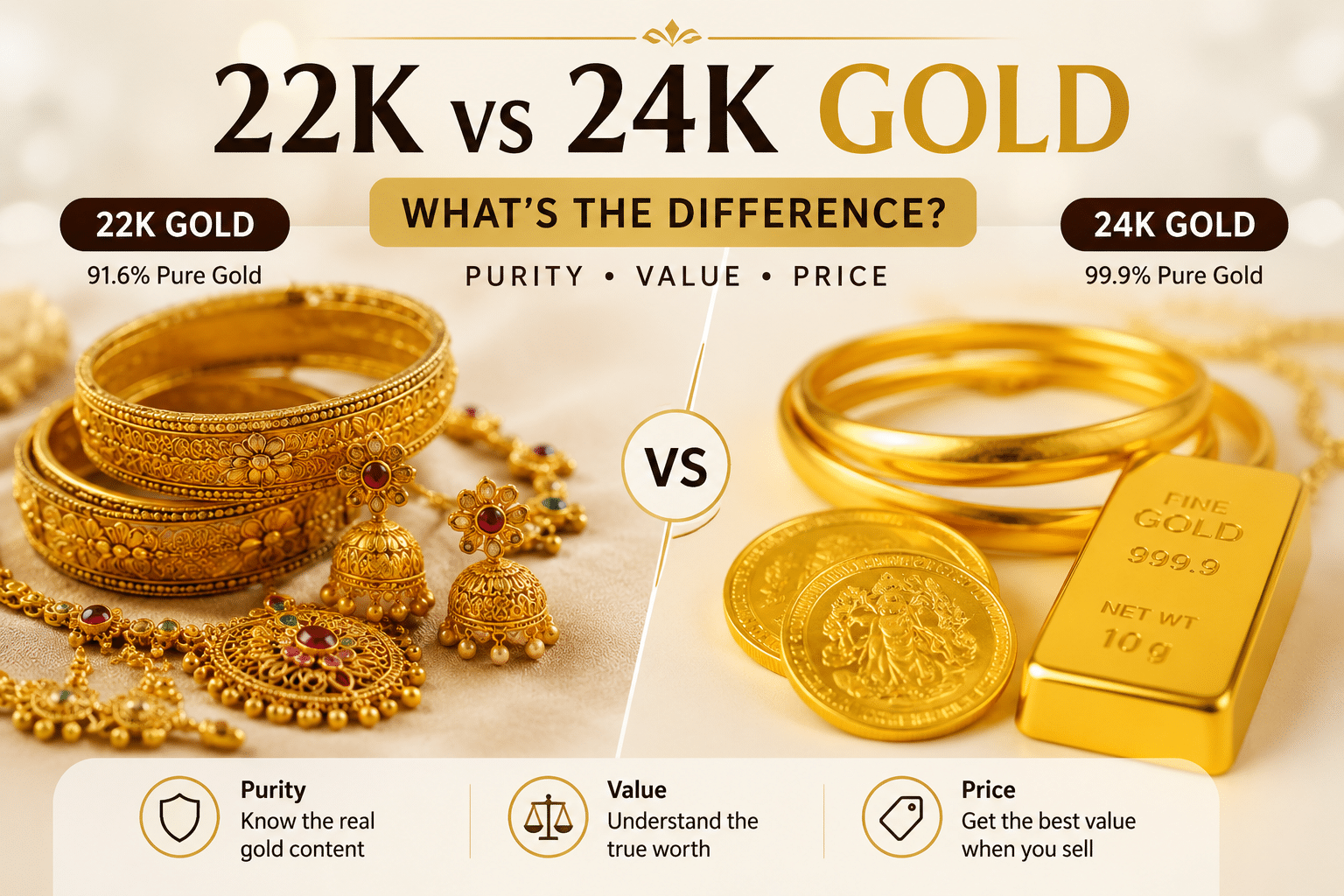
- 24K gold is 99.9% pure gold
- 22K gold is roughly 91.6% pure gold
- 18K gold is roughly 75% pure gold
Other metals that contribute to increased durability make up the remaining percentage.
What is 24Kt Gold?
The purest gold on the market is 24Kt gold. It is extremely valuable due to its purity and has a vivid, rich yellow color.
However, it is typically not used for everyday jewelry due to its extreme softness. Rather, 24Kt gold is frequently found in investment products, coins, and gold bars.
When investing in gold instead of wearing it, people frequently favor 24Kt gold.
What is 22Kt Gold?
In Sri Lanka and many other Asian nations, 22Kt gold is one of the most popular varieties used for jewellery.
About 91.6% of it is pure gold, with the remaining amount consisting of other metals that strengthen the jewellery. Because of this balance, the jewellery can retain a high gold content while still being strong enough to be worn every day.
22Kt gold is used to make a lot of traditional gold jewellery, including necklaces, chains, and bangles.
22Kt jewellery typically has a high resale value when you decide to sell it because of its high gold content.
What is 18Kt Gold?
About 75% of 18Kt gold is pure gold, with the remaining 25% consisting of other metals. This combination strengthens and increases the jewellery’s resistance to scratches.
18Kt gold is frequently used in contemporary jewellery designs, diamond jewellery, and luxury watch components due to its greater durability.
Depending on its weight and design, 18Kt gold jewellery can still be reasonably priced even though it contains less pure gold than 22Kt or 24Kt.
Why Gold Purity Matters When Selling Gold
The price you get when selling gold jewellery is directly impacted by the gold’s purity.
Typically, gold buyers determine the value using:
- The price of gold on the market right now
- The gold’s weight
- The degree of purity (18Kt, 22Kt, or 24Kt)
For instance, because 24Kt gold contains more pure gold, its value per gram will typically be higher. However, depending on their weight, jewellery made of 22Kt and 18Kt can still have a high resale value.
For this reason, before making a bid, expert gold buyers always check the gold’s purity.
How Gold Buyers Test Purity
Reliable gold buyers accurately assess the purity of gold using expert testing techniques. These could be XRF machines, acid testing, or electronic gold testers.
The testing procedure aids in ensuring that the seller receives a transparent and equitable valuation.
Before closing the deal, a trustworthy buyer will always explain how the purity of the gold is assessed.
Summary
Whether you are purchasing, selling, or investing in gold, it is crucial to comprehend its purity. The designations 18Kt, 22Kt, and 24Kt merely denote the amount of pure gold contained in a piece of jewellery.
Although 24Kt gold is the purest, 22Kt gold is most frequently used for traditional jewellery, and 18Kt gold is frequently chosen for diamond and modern jewellery due to its strength.
You can make better choices when purchasing jewellery or selling your gold in the future if you are aware of the differences between these kinds of gold.


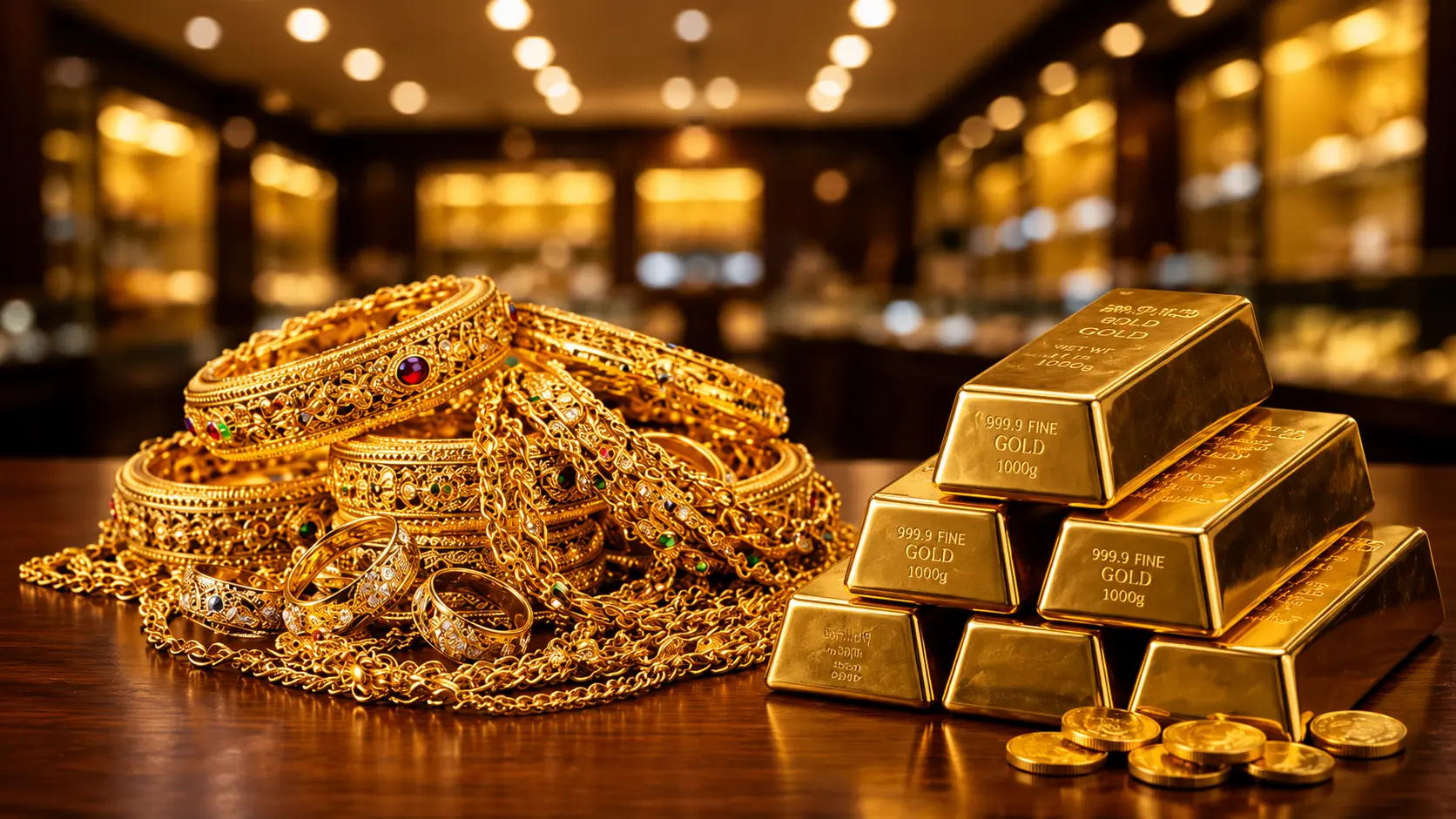






[…] Pure gold is not always used to make jewelry. Rather, it is combined with other metals to make it more durable. Karats (K) are used to measure the purity of gold. […]