Is Silver Rarer Than Gold? Discover the Facts Behind Its Value and Price
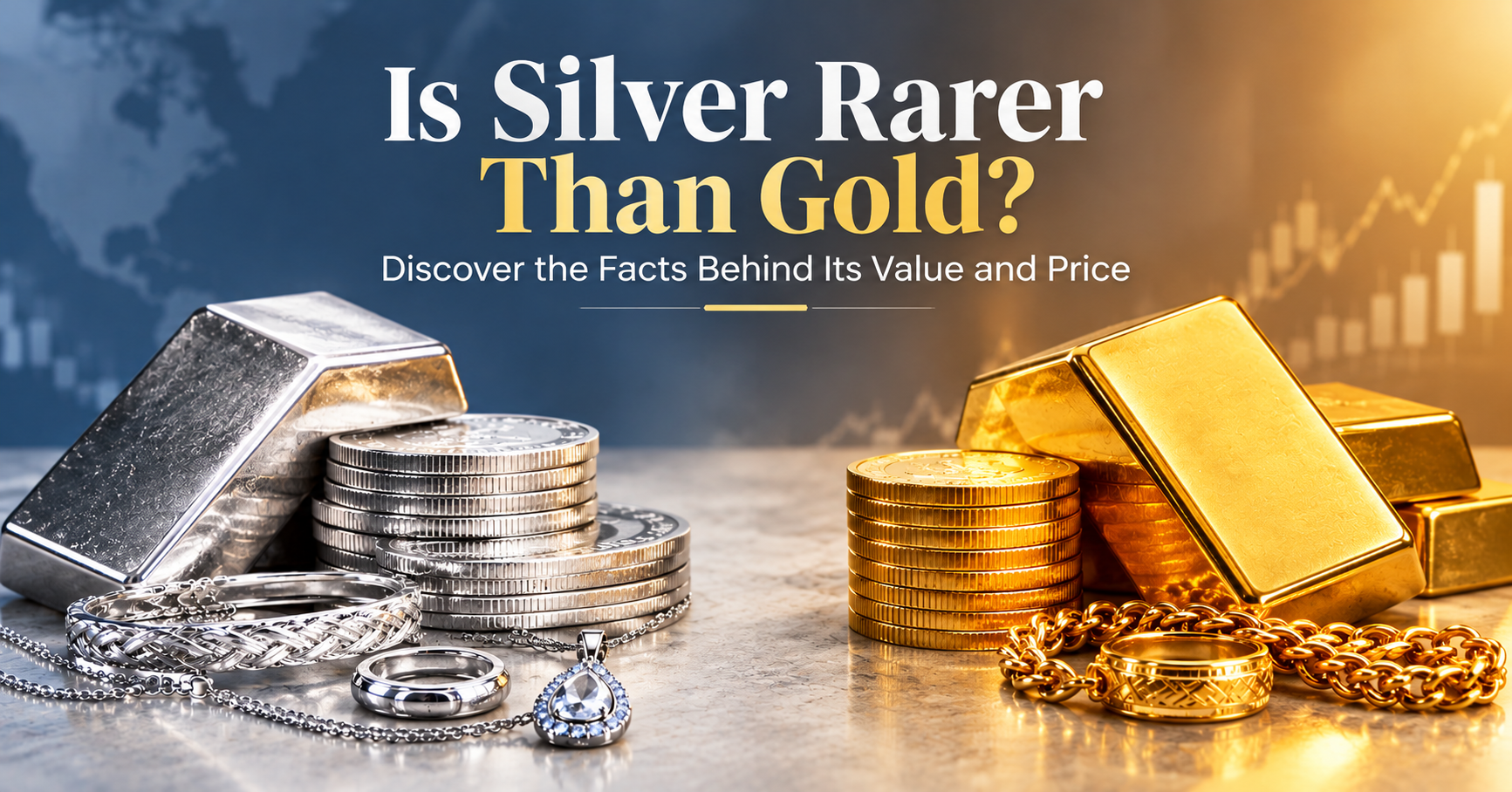
Is silver rarer than gold? Learn about silver’s purity, weight, price factors, gold comparisons, and tips for buying and selling silver in Sri Lanka.
Is Silver Rarer Than Gold? Discover the Facts Behind Its Value and Price
Gold and silver have fascinated people for thousands of years. Both are precious metals used in jewellery, coins, investment products, and various industries. However, gold usually commands a much higher price than silver, leading many people to wonder whether silver is actually rarer than gold and what makes these metals so valuable.
Although silver is considered a precious metal, it is generally more abundant than gold in the Earth’s crust. Nevertheless, silver has considerable economic importance because of its industrial applications, investment demand, and use in jewellery. Its value depends on several factors, including purity, weight, mining supply, market demand, and global economic conditions.
Understanding these differences can help consumers make informed decisions when purchasing or selling precious metals. For people in Sri Lanka, knowing how silver is measured, valued, and compared with gold is particularly useful when evaluating jewellery and other silver items.
1. What Is Silver?
Silver is a naturally occurring chemical element with the symbol Ag and atomic number 47. It is a shiny, white metal known for its excellent electrical and thermal conductivity. These properties make silver useful for jewellery, electronics, solar panels, electrical components, and other applications.
Like gold, silver was formed through astrophysical processes that created heavy elements before they became part of the material from which Earth formed. Today, silver is found in mineral deposits within the Earth’s crust, sometimes alongside metals such as lead, zinc, copper, and gold.
Silver is valued for several reasons:
- Appearance: Its bright, reflective surface makes it popular for jewellery and decorative items.
- Conductivity: Silver is an excellent conductor of electricity and heat.
- Versatility: It has applications in jewellery, electronics, renewable energy, and specialised industrial products.
- Recyclability: Silver can be recovered from jewellery, coins, and some industrial products and reused.
- Market demand: Both investors and industrial users contribute to its economic value.
Unlike some metals that corrode relatively easily, silver is fairly resistant to corrosion. However, it can tarnish when it reacts with sulfur-containing substances in the environment. This may cause silver jewellery to develop a darker surface without necessarily meaning that the item is fake.
2. Is Silver Rarer Than Gold?
No. Gold is generally rarer than silver in the Earth’s crust. Although both metals are naturally scarce, silver occurs at higher concentrations in the Earth’s crust than gold.
Gold is often found in small quantities within rocks and mineral deposits. Extracting it can require processing large amounts of ore to recover relatively small amounts of metal. Silver is also difficult and costly to extract, but it is more abundant in nature.
Another important difference is how the metals are mined. Gold is frequently extracted from deposits specifically targeted for gold production. Silver, on the other hand, is often recovered as a by-product of mining lead, zinc, copper, and gold. Consequently, silver production can depend partly on the economics of mining these other metals.
However, rarity alone does not determine a metal’s price. Gold has a particularly strong position in jewellery markets, investment portfolios, and central bank reserves. Silver has significant industrial demand, including from electronics and solar energy technologies.
These differences help explain why gold generally costs much more per gram than silver, even though both metals are valuable and useful.
3. How Is Silver Weighed?
Weight is one of the most important factors when determining the value of silver. Silver jewellery, coins, bars, and other items are commonly weighed in grams. Larger quantities may be measured in kilograms, while international precious-metal markets frequently use troy ounces.
One troy ounce equals approximately 31.1035 grams. This is different from the ordinary ounce, which equals approximately 28.35 grams.
When weighing silver, it is important to distinguish between the total weight of an item and the amount of pure silver it contains. A silver ornament may include other metals, stones, clasps, solder, or decorative components.
For example, consider a silver item weighing 100 grams that is made from 925 sterling silver.
The pure silver content can be estimated as follows:
Total weight × Purity percentage = Pure silver weight
100 grams × 92.5% = 92.5 grams of pure silver.
This means the item contains approximately 92.5 grams of silver, while the remaining 7.5 grams consists mainly of other metals.
The calculation provides an estimate of its silver content, not its final resale price. A professional valuation may require purity testing and an assessment of any non-silver components.
4. What Are the Different Silver Purity Levels?
Silver purity describes the proportion of silver present in an item. It is commonly expressed as a fineness number, which indicates the number of parts of silver per 1,000 parts of metal.
Some commonly encountered silver purity grades include:
999 fine silver: Contains approximately 99.9% silver. It is commonly used for investment-grade silver bars and some coins.
925 sterling silver: Contains 92.5% silver and 7.5% other metals, usually copper. It is widely used in jewellery because it offers a balance of silver content and durability.
900 silver: Contains approximately 90% silver.
800 silver: Contains approximately 80% silver.
The number stamped on an item can provide a useful indication of its purity. For example, a 925 mark generally indicates sterling silver. However, markings alone do not guarantee authenticity, and testing may be needed to confirm the metal’s composition.
Silver purity also differs from gold purity, which is commonly expressed in karats. For example, 24-karat gold is approximately 99.9% pure, 22-karat gold is approximately 91.67% pure, and 18-karat gold is 75% pure.
Understanding these markings is useful when buying, selling, or comparing precious-metal jewellery.
5. What Factors Affect Silver Prices?
Silver prices change according to international market conditions and the balance between supply and demand. Several factors can influence its value.
Global Supply and Demand
Silver prices can rise when demand increases faster than available supply. Mining output, recycling, industrial consumption, and investment purchases all contribute to the market balance.
Industrial Demand
Silver is used in electronics, solar panels, electrical contacts, and specialised technologies. Growth in these industries may support silver demand. However, economic slowdowns or manufacturing declines can reduce industrial consumption and place pressure on prices.
Economic Uncertainty and Investment Demand
During periods of geopolitical tension, financial instability, or inflation concerns, some investors turn to precious metals. Gold often attracts strong safe-haven demand, while silver can also benefit from investment interest. Nevertheless, silver’s industrial uses mean that its price can respond differently to economic developments.
Mining and Production Costs
Extracting and processing silver requires labour, machinery, energy, and investment. Changes in these costs can affect mining profitability and supply. Because much silver is produced as a by-product, production does not always respond directly to changes in silver prices.
Currency Movements and Interest Rates
International silver prices are commonly quoted in US dollars. Changes in the dollar’s value can influence global prices, while interest rates can affect investor demand for precious metals.
In Sri Lanka, exchange-rate movements also matter. Even when the international price remains unchanged, a change in the rupee’s value against the US dollar can affect the local cost of silver.
6. Silver vs Gold: Price and Purity Comparison
Gold and silver differ in both purity measurement and market price. Gold is generally much more expensive per gram, while silver is more widely used in certain industrial applications.
| Feature | Gold | Silver |
| Common purity grades | 24K, 22K, 18K | 999, 925, 900, 800 |
| Pure metal content | 24K is approximately 99.9% | 999 silver is approximately 99.9% |
| Common jewellery grade | 22K and 18K | 925 sterling silver |
| Main uses | Jewellery, investment, reserves, electronics | Jewellery, investment, electronics, solar panels |
| Typical price per gram | Much higher | Much lower |
| Tarnishing | Highly resistant | Can tarnish over time |
An important point is that a higher purity percentage does not automatically mean an item is worth more than another item made from a different metal. Gold and silver have different market prices, so both purity and the current price per gram must be considered.
For example, 100 grams of 925 silver contains approximately 92.5 grams of silver. Meanwhile, 100 grams of 22-karat gold contains approximately 91.67 grams of gold. Even though their precious-metal contents are relatively similar by weight, the gold item would generally have a much higher metal value because gold’s market price per gram is substantially higher.
Actual buying and selling prices depend on current rates, testing results, and transaction costs.
7. Buying and Selling Silver in Sri Lanka
Silver is available in Sri Lanka in different forms, including jewellery, coins, bars, and decorative items. Whether you are planning to purchase silver or sell items you already own, understanding purity, weight, market prices, and resale conditions can help you make an informed decision.
Where Can You Buy Silver in Sri Lanka?
Silver products can be purchased through jewellery retailers, precious-metal dealers, and sellers offering silver coins or bars. Availability, product selection, and pricing vary between sellers.
Before buying silver, consider these important factors:
- Check the purity: Look for fineness marks such as 925 or 999 and ask the seller how the silver’s authenticity can be verified.
- Confirm the weight: Check the item’s weight and whether it includes stones, clasps, or other non-silver components.
- Compare prices: International silver prices provide a useful reference, but retail prices may include manufacturing charges, dealer margins, and applicable taxes.
- Understand the resale policy: If you plan to sell the item in the future, ask whether the seller offers a buyback service and how the resale price is determined.
- Keep your receipt: Purchase receipts and authenticity certificates, where available, can help establish the product’s details.
Where Can You Sell Silver in Sri Lanka?
If you have old silver jewellery, unused ornaments, silver coins, or other silver items, selling them may allow you to recover some of their material value. However, the amount you receive depends on the item’s silver content, weight, condition, and the buyer’s pricing policy.
Before selling silver, it is useful to understand how the valuation process works.
1. Check the silver’s purity
Silver items can have different purity levels. For example, 925 sterling silver contains 92.5% silver, while 999 fine silver contains approximately 99.9% silver. Identifying the purity helps determine how much actual silver the item contains.
2. Understand the weight
The total weight of an item does not always equal its pure silver weight. Stones, clasps, solder, and other materials may need to be accounted for during valuation. A buyer may also need to test the item to confirm its composition.
3. Check the current silver price
International silver prices change regularly. Local buying rates may differ because of exchange rates, processing costs, dealer margins, and market conditions. Checking the prevailing rate before selling can help you understand the offer.
4. Compare offers from buyers
Different buyers may offer different prices for the same item. Ask how the purity and weight were determined, what rate per gram was applied, and whether any deductions were made.
5. Understand the final resale value
The resale price of silver jewellery may not include the original retail price or craftsmanship charges. Buyers generally focus on the recoverable silver content, although some products may have additional value depending on their type, condition, or collectability.
Can You Sell Broken or Damaged Silver Jewellery?
Yes, broken chains, damaged rings, old ornaments, and other unwanted silver jewellery may still have value if they contain genuine silver. Their condition does not necessarily eliminate the value of the precious metal.
However, the final amount depends on the item’s verified purity, recoverable silver weight, and the buyer’s valuation policy. Before accepting an offer, ask for a clear explanation of the testing and pricing process.
Whether you are buying silver as jewellery or selling items you no longer need, understanding purity, weight, market prices, and resale conditions can help you make a more confident decision.
8. Is Silver a Good Investment Compared with Gold?
Silver may appeal to people who want exposure to precious metals at a lower purchase price per gram. Its industrial applications can also create opportunities for demand growth, particularly when sectors such as renewable energy and electronics expand.
Gold, meanwhile, has a long-established role in central bank reserves and investment portfolios. Its market is influenced by investment demand, jewellery consumption, monetary conditions, and global economic uncertainty.
However, neither metal guarantees a profit. Silver can experience substantial price fluctuations, partly because of changes in industrial activity. Gold prices can also fall when market conditions change.
When evaluating either metal, consider the purchase price, resale arrangements, storage, transaction costs, and the possibility of price declines. A lower price per gram does not automatically make silver a better investment, just as gold’s higher price does not guarantee better returns.
Conclusion
Silver is a valuable precious metal with a long history of use in jewellery, investment, and industry. Although gold is generally rarer in the Earth’s crust and much more expensive per gram, silver remains economically important because of its conductivity, versatility, and demand across several industries.
Understanding silver’s weight and purity is essential when estimating its value. Factors such as global supply and demand, industrial use, mining output, currency movements, and local market conditions also influence its price. For consumers in Sri Lanka, checking purity, confirming weight, comparing prices, and understanding resale conditions can help when buying or selling silver. Whether you own silver jewellery, coins, or bars, knowing how the metal is measured and valued can help you make more confident and informed decisions.