Selling a Luxury Watch: What Affects Its Value and Price?
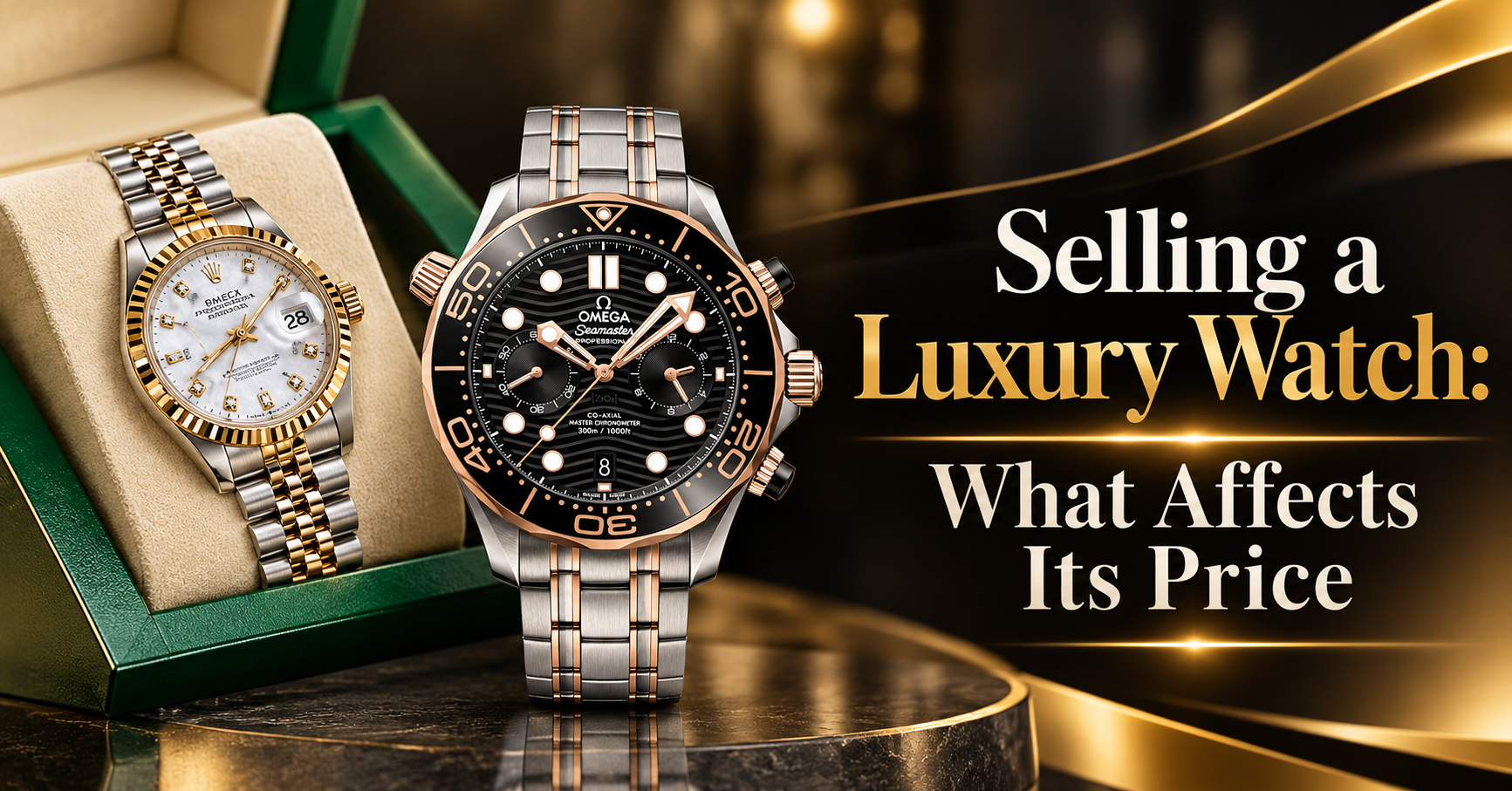
Planning to selling a luxury watch? Discover what affects its resale value, including brand, model, condition, authenticity, original box, papers and market demand.
Selling a Luxury Watch: What Affects Its Price?
A luxury watch is more than just an accessory that tells the time. It may represent a significant investment, a memorable gift, a personal achievement or a treasured family possession. Whether you own a Rolex, Omega, Cartier, TAG Heuer or another recognised watch brand, there may come a time when you consider selling it.
However, one of the most common questions watch owners have is: How much is my luxury watch worth?
The resale price of a luxury watch depends on several factors. While the brand plays an important role, it is not the only consideration. The specific model, physical condition, authenticity, original components, service history and current market demand can all influence how much a buyer is willing to pay.
Understanding these factors before selling can help you make an informed decision, avoid unrealistic price expectations and prepare your watch for a professional valuation.
Let’s explore the key factors that influence the resale value of a luxury watch.
1. Brand and Model
The brand is one of the first things buyers consider when evaluating a luxury watch. Well-established watchmakers with strong reputations, recognised craftsmanship and a history of quality often attract greater interest in the second-hand market.
Brands such as Rolex, Patek Philippe, Audemars Piguet, Omega, Cartier, Breitling and TAG Heuer are widely recognised among luxury watch enthusiasts.
However, owning a watch from a famous brand does not automatically guarantee a high resale price. The specific model and reference number are equally important.
For example, certain sports models, discontinued collections and limited-edition watches may attract more attention than standard models from the same manufacturer.
Factors that can influence the value of a particular model include:
- Popularity: Models that are frequently sought after by collectors and buyers may achieve stronger resale prices.
- Production numbers: Limited production models may be more desirable because of their relative scarcity.
- Discontinued models: Some discontinued watches become more collectible over time, depending on demand.
- Historical significance: Watches associated with important events, designs or milestones may attract collector interest.
Therefore, when assessing a luxury watch, buyers look beyond the brand name and consider the exact model and its position in the current market.
2. Physical Condition of the Watch
The physical condition of a luxury watch is another major factor affecting its resale price. Even an expensive watch from a prestigious manufacturer may receive a lower offer if it shows significant signs of damage or wear.
Buyers generally inspect different parts of the watch to understand how well it has been maintained.
Important areas include:
- Case: Scratches, dents, deep marks or damage to the watch case can affect its appearance and value.
- Bracelet and strap: Stretching, damaged links, worn leather or replacement straps may influence the offer.
- Crystal: Scratches, cracks or chips on the glass can reduce the overall condition.
- Bezel: Buyers examine scratches, dents and signs of excessive wear.
- Dial and hands: Discolouration, damage, moisture marks or unusual replacement parts can affect value.
- Clasp and crown: Loose clasps, damaged crowns and other functional issues may require attention.
A watch in excellent condition, with minimal signs of wear, will generally attract more interest than one requiring significant repairs.
However, minor scratches from normal use do not necessarily mean that your watch has lost most of its value. The impact depends on the brand, model, age and expectations of potential buyers.
3. Original Box, Papers and Accessories
When selling a luxury watch, keeping its original packaging and documentation can make a difference.
Collectors and professional buyers often prefer watches that come with their original box, warranty card, instruction manual and other accessories supplied at the time of purchase.
A complete set may include:
- Original manufacturer’s box.
- International warranty card or certificate.
- Purchase receipt or invoice.
- Instruction manual and documentation.
- Original bracelet links.
- Manufacturer-supplied accessories.
- Service records and maintenance documents.
A watch sold with these items is commonly described as a full set.
Why does this matter?
Original documentation can help establish the watch’s history and support the authentication process. It also gives potential buyers greater confidence when considering the purchase.
However, not having the original box or papers does not automatically make a watch worthless or unsellable. Many genuine pre-owned luxury watches are bought and sold without complete packaging.
The watch itself, its authenticity, condition and market demand remain important considerations.
If you still have the original accessories, it is worth gathering them before requesting a valuation.
4. Authenticity and Verification
Authenticity is one of the most important considerations when selling a luxury watch.
Because high-end watches can have substantial resale values, counterfeit products and watches containing non-original components are a concern in the second-hand market.
A professional buyer will generally examine several details to determine whether a watch is genuine.
The verification process may include:
- Checking the manufacturer’s logo, engravings and markings.
- Examining the case and overall construction.
- Inspecting the movement and internal components where appropriate.
- Reviewing the serial number and model reference.
- Assessing the quality of the dial, hands, bracelet and other components.
- Comparing the watch with the manufacturer’s specifications.
The serial number and reference number can help identify a particular watch and its production details. However, these numbers alone do not prove authenticity, as counterfeit watches may also carry copied markings.
A proper assessment should consider the watch as a whole.
If you are planning to sell a luxury watch, choose a buyer who follows a clear authentication process and can explain how the watch is evaluated.
5. Originality of Parts and Components
A luxury watch’s originality can have a considerable impact on its resale value.
Collectors often prefer watches that retain their original manufacturer-supplied components. This is particularly important for vintage, rare and collectible models.
Over the years, watches may undergo repairs or modifications. Some components may be replaced because of damage, wear or servicing requirements.
Examples include:
- Replacement dials.
- Non-original hands.
- Replacement bezels.
- Aftermarket bracelets or straps.
- Modified crowns.
- Non-original internal components.
Not every replacement part automatically reduces a watch’s value. In some cases, authorised servicing and manufacturer-approved replacement components are necessary to maintain the watch’s functionality.
However, unauthorised modifications or aftermarket parts may reduce collector interest.
For vintage watches, original components can be especially important because they help preserve the watch’s historical character.
If your watch has undergone repairs or modifications, provide the available details to the buyer. Being transparent about its history helps ensure a more accurate assessment.
6. Service and Maintenance History
Like any mechanical or electronic product, a luxury watch requires appropriate maintenance.
Mechanical watches contain intricate internal components that work together to maintain accurate timekeeping. Over time, normal wear may affect their performance.
A documented service history can give buyers confidence that the watch has received appropriate attention.
Useful records may include:
- Service receipts from authorised service centres.
- Maintenance reports.
- Replacement component details.
- Movement inspection records.
- Records of previous repairs.
- Manufacturer service documentation.
A watch serviced by an authorised service centre may be more attractive to buyers, particularly when the work is supported by proper documentation.
However, a recent service does not automatically guarantee a higher selling price. The brand, model, condition and cost of future maintenance may also be considered.
If your watch has not been serviced recently, avoid arranging an expensive service simply because you intend to sell it. First, ask the prospective buyer whether servicing would make a meaningful difference to the valuation.
7. Current Market Demand and Availability
The luxury watch market changes over time. Some models become increasingly popular, while others experience reduced demand.
This means that the resale value of a watch is not always the same throughout the year or across different market conditions.
Several factors can influence market demand:
- Collector interest: Growing interest in a particular brand or model can increase demand.
- Limited availability: Models that are difficult to obtain may attract higher offers.
- Fashion and trends: Changes in consumer preferences can influence the popularity of certain designs.
- Economic conditions: Spending patterns and demand for luxury goods can change with the wider economy.
- Pre-owned market availability: The number of similar watches available for sale can affect competition and pricing.
For example, a popular luxury sports watch may attract considerable attention during a period of strong collector demand. However, its resale price may change when market interest decreases or more examples become available.
This is why online asking prices should not be treated as guaranteed selling prices.
A professional valuation considers the current market rather than relying only on the original purchase price or advertised prices of similar watches.
8. Age, Rarity and Collectability
The age of a luxury watch can influence its value, but older does not always mean more valuable.
Some vintage watches are highly desirable because of their rarity, historical importance, original condition or connection to a particular period in watchmaking.
Other older watches may have limited resale demand, especially if they have significant damage or lack original components.
The following factors can contribute to collectability:
- Limited production numbers.
- Discontinued models.
- Rare dial colours or configurations.
- Historically significant designs.
- Original components and finishes.
- Documented ownership and service history.
For collectors, the combination of rarity and condition can be more important than age alone.
Therefore, it is important to identify the exact model and reference number before estimating the resale value.
Should You Polish or Repair Your Luxury Watch Before Selling?
If your luxury watch has visible scratches or signs of wear, you may be tempted to polish or repair it before approaching a buyer.
However, this is not always the best decision.
Polishing can improve the appearance of a watch, but excessive polishing may remove metal and alter the original shape of the case, bezel or bracelet. This can be particularly undesirable for vintage and collectible watches.
Similarly, repairs carried out by unauthorised technicians may affect originality or raise questions about the quality of the work.
Before spending money on repairs, consider the following:
- Ask a professional buyer to inspect the watch in its current condition.
- Find out whether the damage affects its functionality or resale value.
- Ask whether a repair is necessary before selling.
- Compare the estimated repair cost with the potential improvement in the offer.
- Keep all receipts and records for any previous servicing or repairs.
In many situations, selling the watch in its existing condition and allowing the buyer to assess any required work may be a more practical option.
How to Prepare Your Luxury Watch for Sale
Preparing your watch properly can make the selling process easier and help ensure that the buyer has the information needed for an assessment.
Here are some simple steps to follow.
1. Gather All Original Items
Collect the original box, warranty card, purchase receipt, manuals, extra bracelet links and service records. Having everything together makes it easier to present the watch as a complete set.
2. Identify the Brand and Model
Check the watch’s brand, model name and reference number. This information helps the buyer identify the correct watch and compare it with relevant market information.
3. Record the Serial Number
Keep a record of the serial number for your own reference. Avoid publicly sharing sensitive identifying details in online advertisements.
4. Clean the Watch Carefully
Use a soft, dry cloth to remove surface dust and fingerprints. Avoid using chemicals, cleaning solutions or water unless you know they are suitable for your particular watch.
5. Take Clear Photographs
Photograph the watch from different angles, including the dial, case, bracelet, clasp and any visible damage. Clear photographs can help with an initial assessment.
6. Check Its Working Condition
If possible, check whether the watch is running and whether its basic functions are working. Mention any known problems, such as inaccurate timekeeping or damaged components.
7. Be Honest About Its History
Inform the buyer about previous repairs, replacements, modifications or known damage. Accurate information helps avoid misunderstandings during the valuation process.
What Should You Ask Before Selling a Luxury Watch?
Choosing the right buyer is just as important as understanding your watch’s value.
Before accepting an offer, take time to understand how the valuation is carried out and what the selling process involves.
Here are some useful questions to ask:
1. How do you verify the authenticity of the watch?
Ask about the authentication process and what aspects of the watch are examined.
2. What factors influenced the offered price?
A professional buyer should be able to explain how the brand, model, condition, originality and market demand affect the valuation.
3. Are there any additional charges or deductions?
Confirm whether any fees, repair costs or other deductions apply.
4. Is the offer based on the current market value?
Ask how the buyer considers current market demand and comparable pre-owned watches.
5. How long is the offer valid?
Market conditions and buying policies can vary, so it is useful to understand how long the quoted price remains available.
6. When will payment be made?
Clarify the payment method and timing before completing the transaction.
Getting clear answers to these questions can help you make a more confident decision.
Common Mistakes to Avoid When Selling a Luxury Watch
Selling a luxury watch without understanding its value can sometimes lead to unnecessary losses.
Here are a few mistakes worth avoiding:
- Relying only on the original purchase price: The amount you originally paid does not necessarily reflect the current resale value.
- Assuming every luxury watch increases in value: Not all brands and models appreciate over time.
- Ignoring original accessories: Boxes, papers and additional links may contribute to the overall appeal of the watch.
- Polishing without professional advice: Excessive polishing can affect the original finish and shape.
- Accepting the first offer without comparison: Obtaining more than one valuation can help you understand the range of available offers.
- Not checking the buyer: Always choose a reputable buyer who explains the assessment and payment process clearly.
Taking a little time to understand these points can help you approach the sale with greater confidence.
Final Thoughts: Understand Your Watch’s Value Before Selling
The resale price of a luxury watch depends on several factors, including its brand, model, physical condition, authenticity, originality, service history and current market demand. Understanding these elements can help you set realistic expectations and make a more informed selling decision.
Whether you own a modern luxury watch or a vintage timepiece, it is always worth getting a professional valuation before accepting an offer. You do not necessarily need to spend money on repairs or polishing beforehand. A proper assessment can help identify the watch’s important features and determine a reasonable market value.
If you are considering selling your luxury watch, take the time to understand its value and compare your options. Choose a reputable buyer who offers a transparent evaluation process, explains the factors affecting the price and answers your questions clearly.